Why Warehouses and Data Centers Benefit from Fiber Optic Cabling
From wireless connectivity and security systems to automation and cloud-based platforms, today’s facilities rely on robust data cabling to stay productive and competitive.
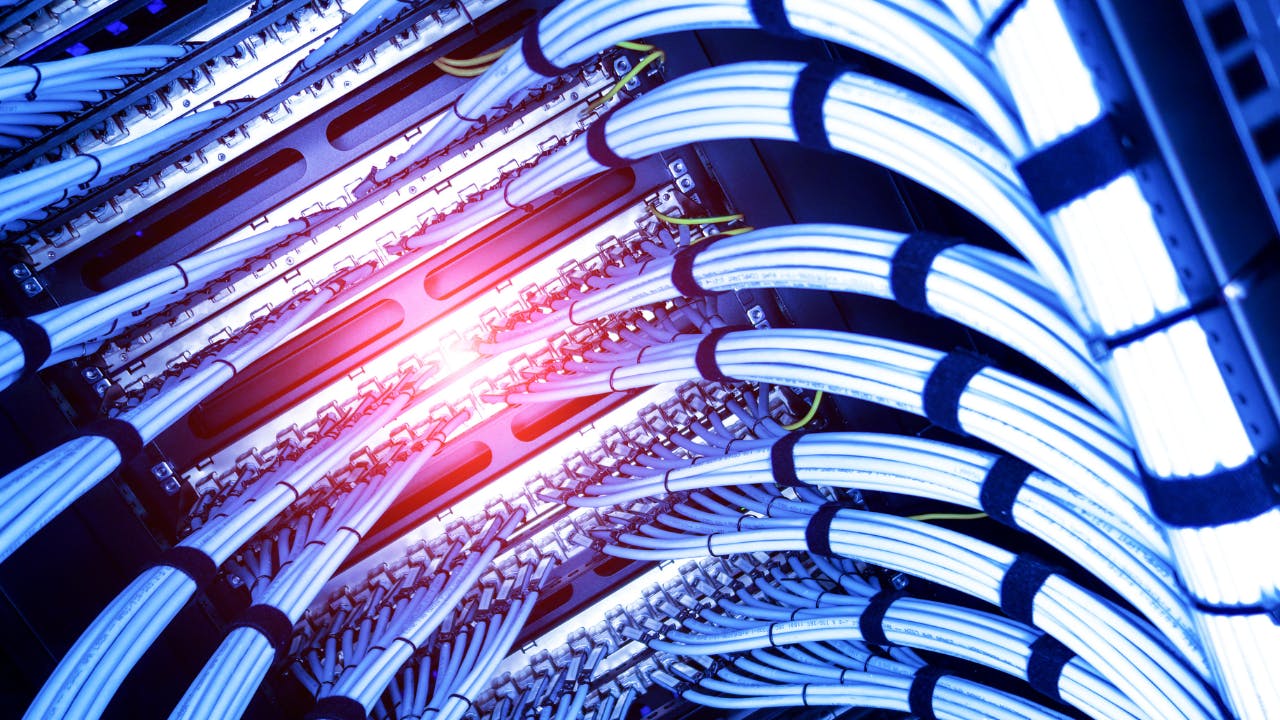
Fiber optic cabling has become the preferred solution for high-performance environments due to its superior speed, reliability, and scalability. At CalComm Systems, we help businesses design and install fiber infrastructures that support today’s demands and prepare for tomorrow’s growth.
The Growing Data Demands of Modern Warehouses
Today’s warehouses rely on far more than forklifts and shelving. They operate with:
- High-density Wi-Fi networks
- Inventory scanners and RFID tracking
- Robotics and automation systems
- Security cameras and access control
- Cloud-based warehouse management systems (WMS)
All of these systems depend on fast, stable data cabling. As warehouse Wi-Fi usage increases and real-time tracking becomes standard, fiber optic cabling provides the bandwidth needed to support uninterrupted operations.
Why Fiber Optic Cabling Outperforms Traditional Data Cables
1. Speed and Bandwidth
Fiber transmits data using light rather than electrical signals, allowing for significantly higher speeds and greater capacity than copper data cables. This is essential for facilities handling large volumes of data every second.
2. Long-Distance Reliability
Warehouses and data centers often span hundreds of thousands of square feet. Fiber supports long cable runs without signal degradation, unlike traditional data cabling, which can suffer performance loss over distance.
3. Immunity to Electrical Interference
Industrial environments contain heavy equipment, motors, and power lines that generate electrical interference. Fiber optic cable is immune to electromagnetic interference, ensuring consistent performance in high-noise environments.
4. Increased Security
Fiber is much harder to tap than copper cabling, making it a more secure option for sensitive business and customer data.
5. Scalability for Future Growth
As facilities expand and technology evolves, fiber makes it easy to scale network capacity without rewiring entire buildings.
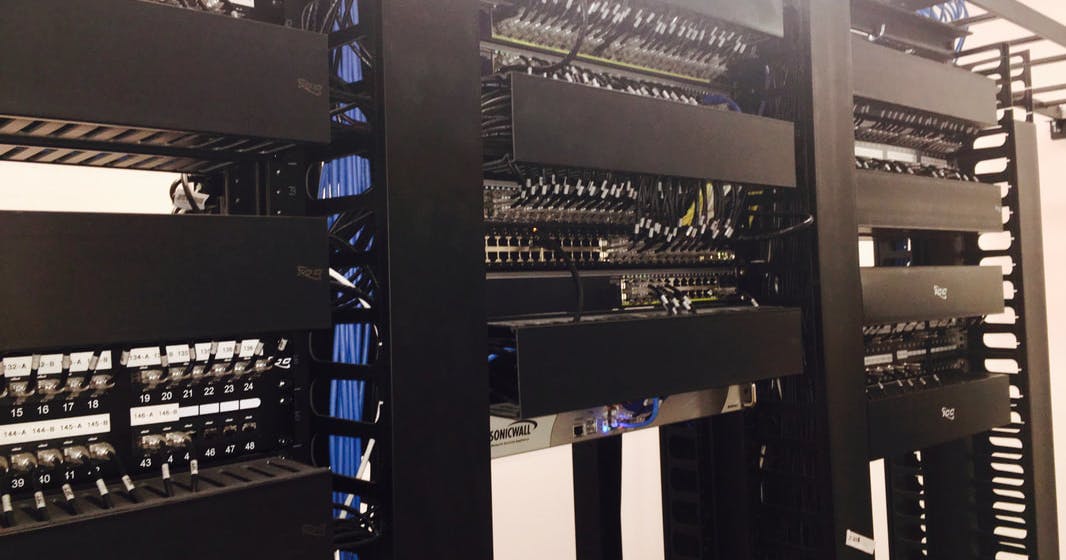
Organized, labeled, and professionally wired racks and conduits reduce future maintenance costs.
Fiber Optics in Data Centers and AI Infrastructure
AI-driven systems, cloud platforms, and high-density computing environments push network demands even further. AI data centers require:
- Ultra-low latency connections
- Extremely high throughput
- Redundant fiber paths for failover
- Massive east-west traffic between servers
Fiber optic cabling is essential for supporting these workloads. Without it, AI model training, real-time analytics, and large-scale data processing cannot operate at full efficiency.
Key Considerations When Planning Data Network Infrastructure
If you’re designing or upgrading a warehouse or data center, successful data networking requires careful planning:
- Proper Cable Pathways
Design overhead trays and underground conduit to support both current and future cable requirements. - Redundancy & Reliability
Deploy multiple fiber paths to mitigate downtime from accidental damage or failure. - Network Segmentation
Separate operational networks, guest Wi-Fi, security systems, and automation traffic to prevent congestion. - Environment & Protection
Use industrial-rated fiber jackets designed to withstand temperature extremes, dust, vibration, and moisture. - Future-Proof Bandwidth
Install fiber with a higher capacity than currently required to accommodate growth without costly reinstallation later.
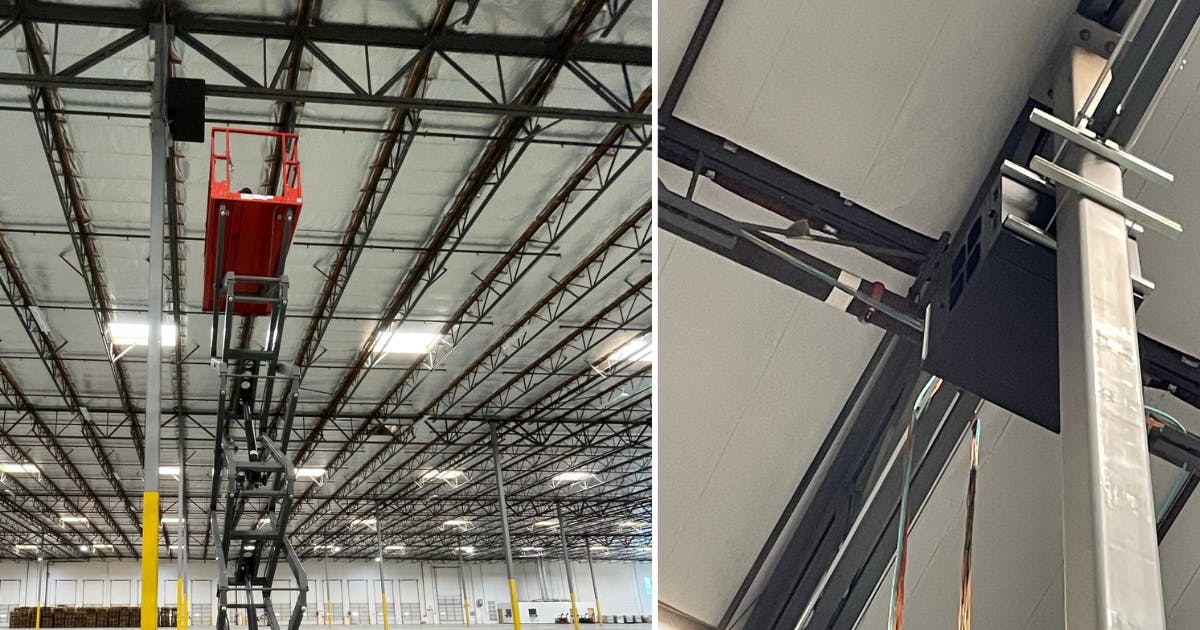
Fiber Optic Cabling Supports Warehouse Efficiency
Efficient warehouses depend on instant data access. Fiber-backed systems allow for:
- Faster inventory scanning and updates
- More reliable warehouse Wi-Fi coverage
- Improved automation performance
- Reduced downtime and maintenance costs
- Better security system responsiveness
In short, strong data cabling directly supports warehouse efficiency and safety.
Why Professional Data Cabling Installation Matters
Fiber optic installations require specialized tools, testing, and certification. A professional data cabling provider ensures:
- Proper fiber termination and splicing
- Certified performance testing
- Compliance with building and safety codes
- Clean, organized cable management
- Long-term reliability and serviceability
Poor fiber installation can cause performance bottlenecks that are difficult and costly to diagnose after construction is complete.

Let’s Build Your Network the Right Way
From warehouse Wi-Fi to AI data centers, fiber optic cabling is no longer optional—it’s the foundation of modern, high-performance infrastructure. Businesses that invest in properly designed fiber networks gain faster operations, improved uptime, stronger security, and the flexibility to scale for future technologies.
If your facility is planning a network upgrade or new construction, working with an experienced data cabling professional will ensure your infrastructure is ready not just for today, but for what comes next.
Need Help Planning Your Data Cabling Infrastructure?
Our team specializes in warehouse- and enterprise-grade fiber-optic installations. Contact us to design a reliable, future-ready network for your facility.
Serving Ontario, California, and the Inland Empire, we specialize in fiber-optic and structured data cabling for warehouses, logistics centers, and enterprise facilities near Ontario International Airport and the surrounding industrial zones.
As one of Southern California’s busiest distribution hubs, Ontario demands fast, reliable, and scalable network infrastructure. Our fiber solutions support high-density Wi-Fi, security systems, automation, and data center environments—helping local businesses operate efficiently and scale with confidence.